
Ode to Joy
Theme from Beethoven's 9th Symphony.
Beethoven - Ode to Joy
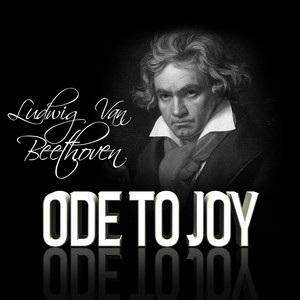
The History of Beethoven's Ode to Joy
Few pieces of music have achieved the universal recognition of Ode to Joy, the triumphant choral finale of Ludwig van Beethoven's Symphony No. 9 in D minor, Op. 125. It is one of the best-known melodies ever written and has become a symbol of hope, freedom, human brotherhood, and European unity. Yet its history stretches back more than thirty years before Beethoven completed the symphony, beginning with a poem written during the Enlightenment.
Origins: Schiller's Poem (1785)
The story begins not with Beethoven, but with the German poet, historian and philosopher Friedrich Schiller.
In 1785, while living in Dresden, Schiller wrote a poem entitled An die Freude ("To Joy"). The poem celebrated the Enlightenment ideals of universal brotherhood, freedom, friendship and the unity of all mankind. Europe at the time was still divided by rigid class systems, monarchies and political oppression, and Schiller's vision of all humanity becoming "brothers" was both idealistic and politically daring.
Joy, beautiful spark of divinity,
Daughter of Elysium...
The poem proclaims that joy has the power to unite all people regardless of wealth, rank or nationality.
Schiller later revised the poem in 1803, softening some of its more revolutionary language after the political upheavals surrounding the French Revolution.
Beethoven's Lifelong Fascination
Beethoven first encountered Schiller's poem as a young man, probably around 1792, shortly before leaving Bonn for Vienna.
The ideals expressed in the poem perfectly matched Beethoven's own beliefs. Throughout his life he admired liberty, equality, human dignity, resistance to tyranny and universal brotherhood.
Friends later recalled that Beethoven often spoke of setting Schiller's poem to music. Sketchbooks from as early as 1793 contain ideas connected with An die Freude. Over the next three decades he repeatedly returned to the idea, but no solution satisfied him.
The difficulty was obvious: how could a composer incorporate singers into a symphony? At the time, symphonies were purely orchestral works. No major composer had ever concluded a symphony with a chorus.
The Long Road to the Ninth Symphony
Between 1795 and 1822, Beethoven transformed Western music through works including the First Symphony, the Third Symphony ("Eroica"), the Fifth Symphony, the Sixth ("Pastoral"), the Seventh Symphony and the Eighth Symphony.
By the early 1820s he had become the most celebrated composer in Europe. However, he also faced immense personal hardship. His hearing had deteriorated steadily since the late 1790s, and by the time he began serious work on the Ninth Symphony he was almost completely deaf. He could no longer perform publicly, and conversation books had become his primary means of communication. Yet his imagination remained extraordinary. He continued composing entirely in his mind.
Commission for a New Symphony
In 1817 the Philharmonic Society of London commissioned Beethoven to write two new symphonies. Progress was slow. During these years he devoted much of his energy to other monumental compositions, including the Missa Solemnis, the late piano sonatas, the Diabelli Variations and the final string quartets.
Eventually, around 1822, work on the Ninth Symphony accelerated. It became clear that this would be unlike any symphony ever written.
Creating the Finale
The first three movements of the symphony are entirely orchestral. Then comes one of the most dramatic moments in music history.
The finale opens with violent orchestral outbursts. The cellos and double basses appear almost to reject themes from the previous movements before introducing an entirely new melody. That melody is now known throughout the world as Ode to Joy.
At first it is heard quietly. Only gradually does it expand through the orchestra. Then, in an unprecedented innovation, a bass soloist interrupts:
O friends, not these tones!
Let us strike up more pleasing and joyful ones!
These words were written by Beethoven himself rather than Schiller. They serve as an introduction to Schiller's poem, after which the chorus enters with the famous opening words:
Freude, schöner Götterfunken...
The finale continues as an enormous set of variations, combining full orchestra, four vocal soloists, mixed chorus, Turkish-style military band, fugues, marches, lyrical episodes and monumental climaxes. Nothing comparable had ever been attempted in a symphony.
The Premiere (1824)
The Ninth Symphony premiered on 7 May 1824 at the Theater am Kärntnertor in Vienna.
Although Beethoven insisted on standing beside the conductor, he could not hear either the orchestra or the audience. The official conductor, Michael Umlauf, instructed the musicians to follow him rather than Beethoven.
According to the famous account, after the final notes Beethoven continued facing the orchestra, unaware that the audience had erupted into thunderous applause. Contralto soloist Caroline Unger gently turned him toward the audience so he could see the standing ovation. Reports state the applause was so enthusiastic that authorities had to calm the audience because demonstrations of approval beyond those normally shown to members of the imperial family were officially discouraged.
Reception
Not everyone immediately embraced the work. Many listeners found it astonishing, while others considered it excessively long and unconventional. Some critics believed voices had no place in a symphony.
Nevertheless, admiration steadily grew. Within a generation the Ninth Symphony was regarded as one of the greatest achievements in Western music.
The Melody's Independent Life
Although the entire finale lasts about twenty-four minutes, the simple main melody quickly took on a life of its own.
Remarkably, Beethoven's famous tune is built almost entirely from adjacent notes of the scale, making it memorable and easy to sing. This simplicity helped it spread rapidly across Europe.
The melody soon appeared in piano arrangements, military bands, church adaptations, school music, amateur choirs and public celebrations. Today it is instantly recognisable across much of the world.
Political and Cultural Uses
Few works of music have been used by so many different political movements. Because Schiller's poem celebrates universal humanity rather than any specific nation, the music has often served as a symbol for many different causes.
During the nineteenth century it became associated with liberal democracy, national unity, peace movements and educational institutions. During the twentieth century it was also appropriated by authoritarian regimes seeking prestige, demonstrating that powerful works of art can be interpreted—and sometimes misused—in very different ways.
Post-War Symbolism
After the devastation of the Second World War, the message of universal brotherhood took on renewed significance. The symphony increasingly became associated with peace and reconciliation.
One of the most famous performances occurred at Christmas 1989, shortly after the fall of the Berlin Wall. Leonard Bernstein conducted the Ninth Symphony in Berlin with musicians from both East and West Germany and several other countries. In a symbolic gesture, he substituted the word Freiheit ("freedom") for Freude ("joy") in the sung text, reflecting the spirit of reunification.
The European Anthem
One of the melody's most significant modern roles is as the anthem of Europe.
In 1972, the Council of Europe adopted the instrumental theme from Beethoven's Ode to Joy as its official anthem. In 1985 it was also adopted by the European Communities, and today it serves as the official anthem of the European Union.
Importantly, the anthem contains no words, allowing it to represent speakers of every European language equally.
Musical Legacy
The Ninth Symphony fundamentally changed what a symphony could be. Before Beethoven, symphonies were purely orchestral works, while choruses belonged to opera or sacred music.
After Beethoven, composers such as Brahms, Bruckner, Mahler and Shostakovich sought to match the scale and ambition of the Ninth. The idea that a symphony could express profound philosophical ideas became one of Beethoven's greatest contributions to music.
UNESCO Recognition
In 2001, the autograph manuscript of Beethoven's Ninth Symphony was inscribed on UNESCO's Memory of the World Register, recognising its outstanding cultural and historical significance.
Enduring Popularity
Today, Ode to Joy is heard in concert halls, schools, state ceremonies, sporting events, commemorations, New Year celebrations and community performances across the globe. It has been arranged for virtually every type of musical ensemble, from solo piano to brass band, rock groups and electronic musicians.
Its straightforward melody has also made it a favourite of beginning instrumentalists, while the complete choral finale remains one of the most demanding works in the orchestral repertoire.
Conclusion
The history of Ode to Joy is the story of an extraordinary collaboration across generations. Friedrich Schiller provided the words in 1785, expressing an Enlightenment vision of universal fellowship. Nearly forty years later, Ludwig van Beethoven transformed those ideals into music of unprecedented power in the finale of his Ninth Symphony.
Written when the composer was almost completely deaf, the work broke the traditional boundaries of the symphony by introducing voices into its final movement and creating a synthesis of orchestral and choral music unlike anything that had come before.
Over the two centuries since its premiere in Vienna on 7 May 1824, Ode to Joy has transcended its origins as the conclusion of a symphony. It has become one of humanity's most enduring musical symbols—celebrating hope, peace, dignity and the aspiration that people of every nation and background might recognise one another as equals. Few works of art have travelled so far from the concert hall into public life, and fewer still continue to speak with such clarity to successive generations.